
Prague, April 22, 2026 – Demand for new apartments in Prague remains high, maintaining the average level seen over the past two years. In the first quarter, approximately 1,800 new apartments were sold in the capital. However, supply continues to fall short, and new construction is further constrained by rising construction supply costs. This translates into continued price growth, with Prague prices surpassing the CZK 180,000/m² threshold for the first time. This emerges from an analysis conducted by development companies Central Group, Skanska Residential, and Trigema.
Prague, April 22, 2026 – Demand for new apartments in Prague remains high, maintaining the average level seen over the past two years. In the first quarter, approximately 1,800 new apartments were sold in the capital. However, supply continues to fall short, and new construction is further constrained by rising construction supply costs. This translates into continued price growth, with Prague prices surpassing the CZK 180,000/m² threshold for the first time. This emerges from an analysis conducted by development companies Central Group, Skanska Residential, and Trigema.
In the first quarter, approximately 1,800 new apartments were sold in Prague, virtually matching the sales volume from the final quarter of last year. Demand thus remains strong and holds steady at the two-year average. While this represents a year-on-year drop of roughly 30%, the baseline for comparison in this case was the second-best sales performance in recorded statistical history.
The market share of smaller apartments continues to grow. 1-bedroom (1+kk) and 2-bedroom (2+kk) layouts together account for more than three-quarters of all sales, with 2-bedroom units making up roughly 45% and studios (1+kk) approximately 31%. Conversely, the proportion of larger apartments continues to decline due to their higher total absolute price, which makes financing less accessible.
Source: Central Group, Trigema, Skanska Residential Analysis
The largest share of sales is concentrated in Prague's primary growth areas. Nearly one-third of all sold apartments are located in Prague 9. Together with Prague 5, these two municipal districts represent approximately half of the total market. Prague 4 and 10 also maintain significant market shares. Today, these four locations drive the majority of new apartment sales in the capital, confirming that demand is primarily focused on larger development areas with broader inventory.
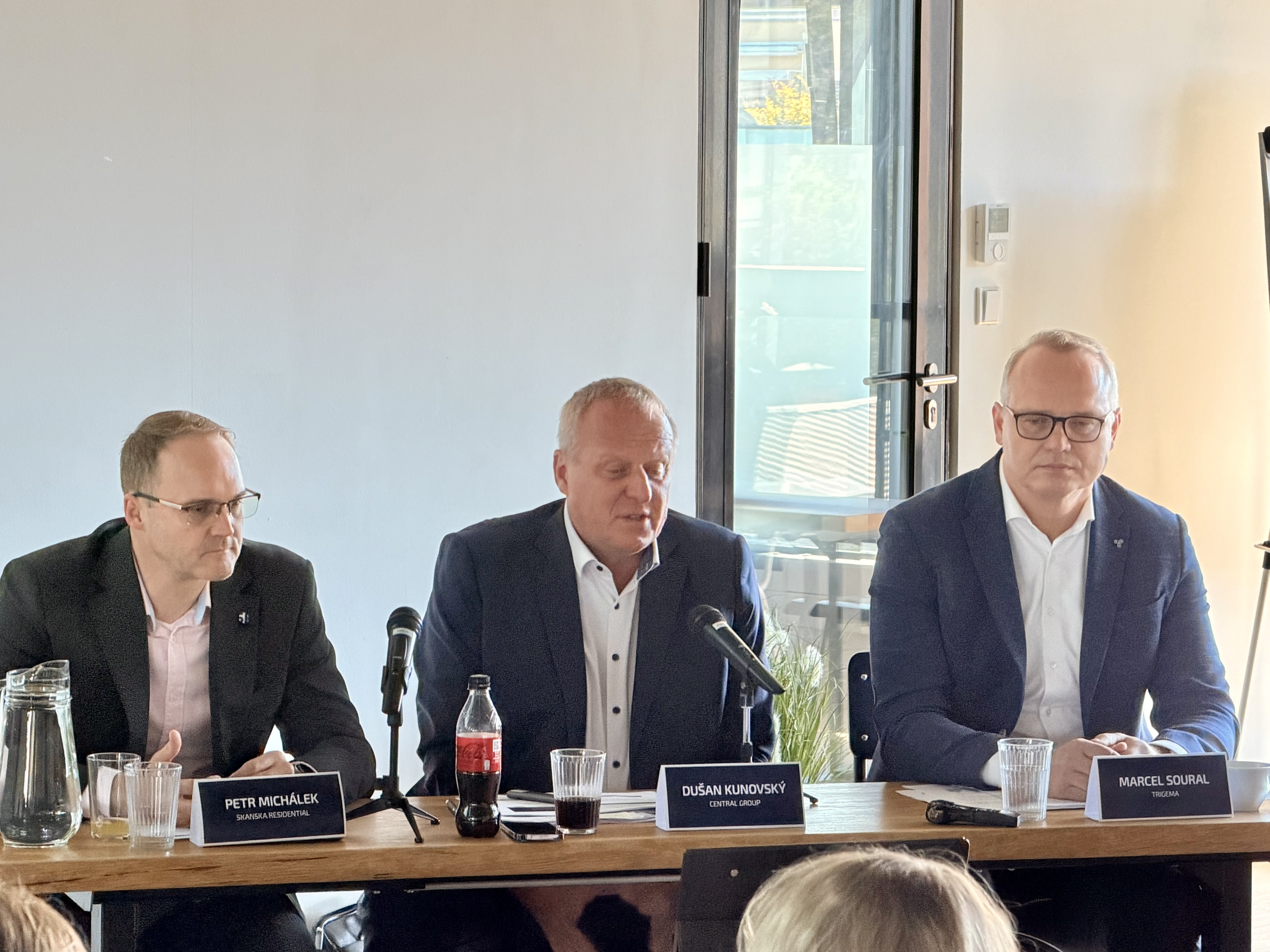
“Prague’s new housing market remained strong through the first quarter of 2026. Over the past two years, we have observed a steady sales pace averaging around 1,800 apartments sold per quarter, which represents an increase of nearly a quarter compared to the ten-year average. This long-term trend is primarily driven by an insufficient supply of new apartments on the market due to inefficient permitting processes and urban planning. Over the last two years, the situation has been supported by more favorable financing, economic stability, and a pragmatic approach from buyers. Clients recognize that housing price growth outpaces reductions in mortgage rates, and as a result, they are not delaying their purchases. The combination of limited supply and continued price appreciation creates strong market pressure that is unlikely to ease anytime soon,” says Petr Michálek, Chairman of the Board of Directors at Skanska Residential.
Apartment Prices Hit New Record Highs Again
The average asking price for new apartments in Prague reached CZK 182,311 per m² in the first quarter, rising by 2.6% quarter-on-quarter and 8.6% year-on-year. Actual selling prices grew even faster, climbing to CZK 177,647 per m², an 11.2% year-on-year increase. Both figures mark new historical highs.
Price increases are driven mainly by smaller units. For 1-bedroom (1+kk) and 2-bedroom (2+kk) layouts, prices are rising at a double-digit pace, whereas for larger apartments, price growth has slowed significantly or even seen slight declines. The significant disparity between different parts of Prague is also evident. The lowest prices below the Prague average remain in Prague 9 and 10, while the highest prices are held by the city center and Prague 7.
At the same time, construction supply costs are having an increasingly noticeable impact on pricing. Additional pressure stems from the current geopolitical situation, which is driving up energy, transport, and petroleum-derived material costs. Financing is also becoming more expensive for both end-buyers and developers alike. The combination of these factors weakens the economic feasibility of new projects and restricts the launch of new construction.
Source: Central Group, Trigema, Skanska Residential Analysis
“Average prices for new apartments in Prague have now exceeded 182 thousand CZK per square meter. Over the long term, they are driven upward mainly by insufficient supply and slow permitting. Now, they are also being heavily impacted by construction supply costs, which have surged by 27% in the last two years alone! Initiating new construction projects is thus losing economic rationale in many cases. Unless the situation stabilizes quickly, the market faces massive project delays and further deterioration in housing affordability,” says Dušan Kunovský, Founder and CEO of CENTRAL GROUP.
Apartment Supply Has Been Stagnating Long-Term
For roughly the past four years, the inventory of new apartments in Prague has hovered between 5,000 and 5,500 units and continues to stagnate. The market is not replenishing at a pace that matches the strength of demand or the growth needs of the capital city. Given current conditions in the construction sector, there is a risk of project delays and a further drop in supply, which would amplify upward price pressure. Furthermore, the supply structure mirrors demand, focusing primarily on smaller apartments. 2-bedroom (2+kk) and studio (1+kk) layouts hold the largest share. Supply is also heavily concentrated in a few areas of Prague. Nearly two-thirds of all available apartments are located in just three municipal districts: Prague 9, 10, and 5. Conversely, Prague 1 and 2 combined represent only about 2% of total supply.
Such low inventory remains far below market needs and confirms that new projects are still not being brought to market in sufficient volumes or at the necessary pace. If construction supply costs and expensive financing persist, the replenishment of supply could worsen further.
Source: Central Group, Trigema, Skanska Residential Analysis
“Apartment supply rose slightly in the first quarter to 5,450 units, but year-on-year growth remains slow and falls short of pre-pandemic levels. The market remains structurally imbalanced – two-thirds consist of small 1+kk and 2+kk apartments, whose floor areas continue to shrink due to pricing pressure. These units often serve as investments and head toward the rental market. While supply there is growing, it is insufficient to meet demand, pushing rents up by nearly 7% year-on-year. Without boosting new construction, pressure on prices will continue to grow,” concludes Marcel Soural, Founder and Chairman of the Board of Directors at Trigema.